


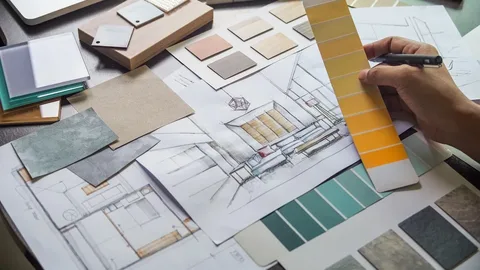
There are many chances in interior design outside of traditional work. Those interested in entrepreneurship might investigate furniture collections, home styling, material consulting, visual merchandising, development of design content or independent consultation.
Digital platforms have provided designers with more options to present their work and engage with possible customers and colleagues.
The interior design course in Jaipur professional path may therefore be variable. Students don’t have to choose one particular path. Their education, interests, talents and experience may influence the course they ultimately choose.
Opting for an Education That Connects Creativity to Real-World Design
Choosing an interior design program is a crucial choice as learning environment may impact on both creative growth and professional training. Students should ask if the school they are interested in offers opportunity to learn about the basics of design, learn technical skills, experiment with ideas, work on projects, get feedback and produce a relevant portfolio.
The learning environment should also support students to relate conceptual innovation to practical implementation. Knowing what a design looks like, is just half the equation. Knowing why it works, how people will use it, what materials are acceptable, how it can be built and how it can be presented effectively is also very essential.
In the end, interior design is a discipline of choice, where creativity may become a practical talent. It gives students the ability to turn ideas into surroundings that impact the ways people live, work, rest, shop and interact. By combining education, experimentation, technical preparation, project experience, and portfolio development, students may start laying the basis for a creative and developing professional path.
Interior Design is where function and creativity collide. For students who are excited by places and want to convert creative ideas into real experiences, studying the field may be the start of a path that mixes art, technology, problem-solving and human understanding. In a city as physically and culturally unique as Jaipur, that trip might become a chance to explore new views while gaining the abilities to influence the places of future.
Create a Personal Design Identity and Professional Portfolio
Eventually every prospective interior designer will have to create an own creative identity. Students may start their study by experimenting with several styles, before determining the sorts of places, materials, colors or themes which most attract them. Education may provide a space where such exploration can be done with assistance.
A personal design identity doesn’t have to entail sticking to one style. Instead it might be a method a designer addresses difficulties One student may have an interest in ecological materials, another may enjoy simple modern interiors while another may be influenced by traditional Indian workmanship. What counts is the ability to form a clear design viewpoint informed by research and practical reasoning.
Portfolio development is a crucial part of this process. A systematic portfolio may display the evolution of ideas from research to final design. What a student can do may be shown via sketches, blueprints, elevations, material studies, mood boards, models, renderings and finished projects.
A good portfolio should show off your problem solving skills, too. Employers and customers want to know not just what a completed space looks like, but how the designer arrived at the answer. To make a portfolio more useful and professional, it may be enhanced by showing research, idea development, spatial planning, and technological choices.
Portfolio building, therefore, may be a continuing aspect of education for students preparing for a job. Each project has the potential to teach us something new, whether it technical knowledge, artistic experimentation, material research, or a new way of handling a design difficulty.
Career Paths Available After Studying Interior Design
Interior design offers several job opportunities, since skilled specialists are needed in many areas of the economy. Graduates may find employment as home interior designers, commercial interior designers, in hospitality, retail, workplace design, exhibition design, furniture design, styling, visual merchandising, set design or other creative sectors.
Designers may be employed by established design studios or architectural firms or may operate independently. With experience, skilled workers may go to bigger projects, specialize in certain kinds of interiors or start their own design firm. That is why the choice of a location to study interior design is a serious choice.
Jaipur provides an exciting setting for budding interior designers. The city is a mixture of old architecture, great workmanship, bright colors, historical influences, modern structures and changing lifestyle styles. Students investigate the link between historical and contemporary design, developing their own creative viewpoints. Therefore, taking interior design courses in Jaipur might give chances to learn not only in the classroom but also via the city’s unique visual and cultural environment.
An excellent interior design education pushes students to look outside the box, but also to recognize practical needs. It should expose students to design concepts, space planning, materials, furniture, lighting, technology, sustainability and professional presentation. The appropriate learning environment will enable students to progressively translate their ideas into specific design solutions and prepare them for a wider variety of prospects in the design business.
The Creative World of Interior Design
People frequently confuse Interior Design with just adorning a space. In fact it’s a much deeper process of understanding people, environments, materials, function, esthetics and technological needs. Designers must think about how a room will be utilized, how people will move through it, the impact of natural and artificial light and how various aspects might be brought together to create a pleasant area.
Interior design students are taught to look at places differently. Simple room may be a study of proportion, circulation, color, texture, arrangement of furniture, lighting and usefulness. One of the most crucial talents a prospective designer can learn is the capacity to watch and analyze. Students learn to see a place not only for what it is now, but for what it can be.
Creativity plays an important part in this process. Students may explore diverse spatial ideas, materials, patterns, textures, furniture placements and color combinations. They are free to think modern, classic, minimal, industrial, green, eclectic and other design styles. The experimenting helps individuals to discover their own tastes and to explore a distinctive design language.
Creativity also has to be backed by rationality, however. A visually stunning design will not be effective if comfort, safety, mobility, maintenance, budget or practical considerations are ignored. Therefore, interior design educations aid students to know the harmony of the imaginative and the practical. This mix enables creative ideas to be turned into practical solutions that operate well in the real world.
Jaipur: A Great Place For Design Students To Be Inspired
The setting in which pupils learn may have a substantial impact on their creative growth. Jaipur is of special importance to prospective designers since it provides a unique blend of history, architecture, craftsmanship, color and modern development. The historic architecture and cultural traditions of the city provide many examples of how design may express culture and identity.
The ancient architecture of Jaipur shows the emphasis of proportion, symmetry, patterns, courts, arches, textures, ornamental features and use of natural materials. These qualities might be useful sources of inspiration for pupils. By studying traditional design, they may learn to identify the architectural features that contribute to the character of an interior, and how to combine cultural aspects into modern environments.
Summary
The city is also known for a number of traditional crafts. They may inspire students to investigate the connection between materials and design using textiles, ceramics, woodwork, metals, masonry, surface decoration and other creative techniques. Understanding interior design course in Jaipur craftsmanship will allow future designers to recognize the value of detail and the way in which handcrafted features can enhance contemporary homes.
